
Richard Bullick
The vast improvement on the scoreboard compared to the previous visit to Twickenham, yet the justifiable frustration with aspects of Ireland’s performance last Saturday, are both testament to just how far the Green Wave has risen over the past couple of years.
Being beaten 33-12 by England in the Guinness Six Nations opener was a very respectable result set against the traumatic 88-10 trouncing suffered in April 2024, and Scott Bemand’s team can now look forward to the remainder of this Championship campaign.
Next up is this Saturday’s historic clash at Dexcom Stadium (5.40pm, BBC iPlayer) with Italy – who lost 40-7 away to France in their opening game at the weekend – in the first ever Six Nations match to take place in Galway.
If Ireland can build on the best aspects of their mixed display against the world champions, they will be confident of heading to face France in round three with a win under their belts before hosting Wales and Scotland in Belfast and Dublin next month.
Erin King’s try in her first match as captain meant Ireland shared the second half spoils 12-12 in contrast to the unanswered 42 points put on them by the Red Roses in the second half of last spring’s Cork clash when the hosts went down 49-5.
That was a very different fixture in that Ireland actually led late in the opening period and were in the game until the last half hour, whereas England got away at the weekend, with the first of three converted tries before the break coming as early as the eight minute.
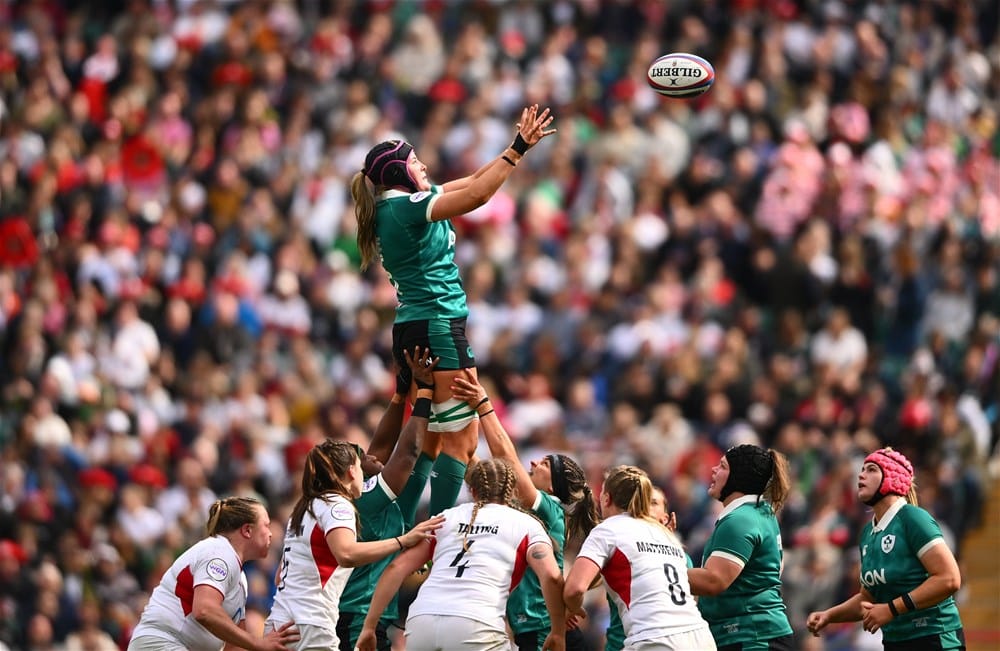
However, with a women’s Six Nations record crowd of 77,120 in attendance for England’s first fixture since winning the World Cup in the same stadium last September, it is to Ireland’s considerable credit that heads didn’t drop and the floodgates didn’t open.
The visitors dug deep, there were good finishes by replacement winger Anna McGann and new skipper King in the final quarter and outhalf Dannah O’Brien converted the latter of those tries to level the scores for the second half.
There is no shame in being beaten by the most dominant team, men’s or women’s, in the history of international rugby, who have now extended their record to 34 consecutive victories since narrowly losing the 2022 World Cup final to New Zealand in Auckland.
England haven’t lost a single game in the Six Nations since 2018 and never been beaten at home by Ireland, who hadn’t even crossed their tryline in seven years until Amee-Leigh Costigan’s touchdown which gave the hosts the lead 12 months ago.
But what will rankle from an afternoon when England weren’t at their irresistible best and lacked cohesion at times, is that Ireland’s daunting task was rendered more difficult by the handling errors and indiscipline which helped the hosts establish footholds in their 22.
The platform from penalties to the corner laid the foundation for all three English tries in the first half hour, hooker Amy Cokayne touching down at the back of a dominant maul and the other two being close-range efforts by powerful prop Sarah Bern.
All three were converted by Helena Rowland, starting at inside centre alongside new captain Meg Jones in the absence of the latter’s regular partner Tatyana Heard, but Ireland came within a whisker of falling further behind by the interval.
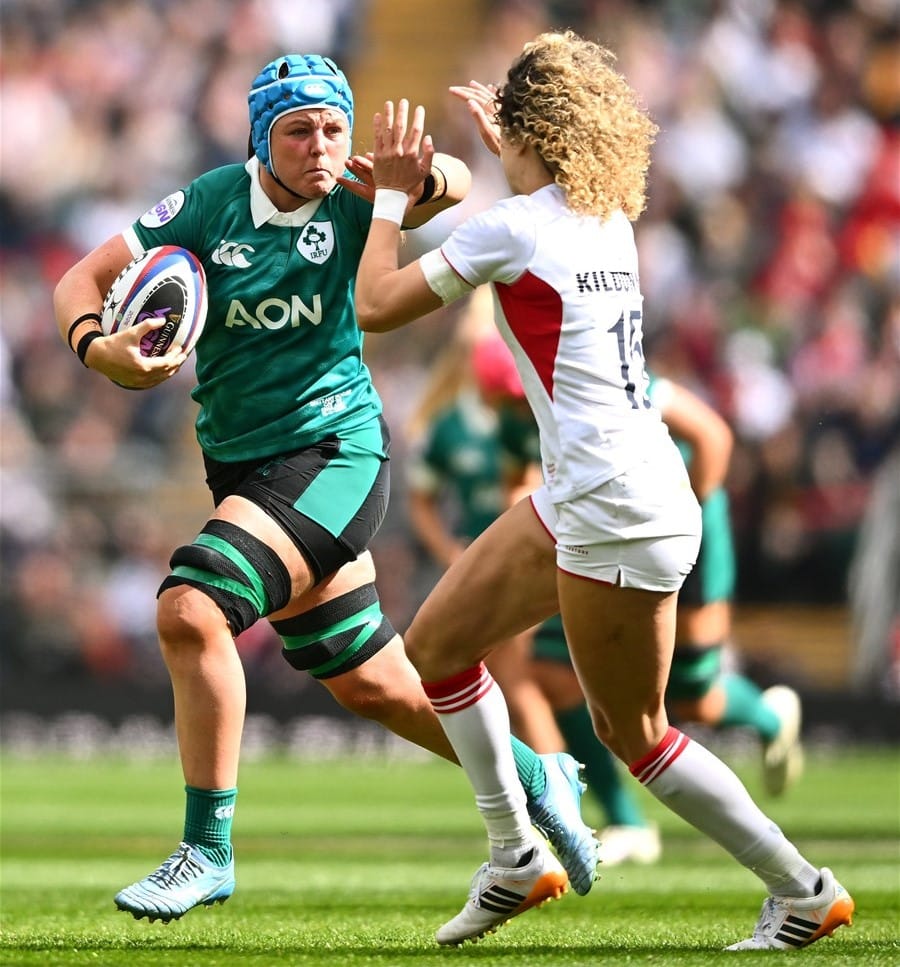
A last ditch-tackle by Olympian Vicky Elmes-Kinlan, surprisingly preferred on the wing to McGann, caused England’s poster-girl Ellie Kildunne to lose control in the act of scoring under the Irish posts seconds before the clock went into the red.
As well as putting themselves under pressure with the errors and infringements – though some officiating decisions definitely didn’t favour Ireland – Bemand’s women weren’t able to make the most of their own attacking chances.
Losing a couple of crucial lineouts was compounded by O’Brien kicking a penalty to touch the wrong side of the corner flag and some of Ireland’s influential figures weren’t as prominent as might have been expected.
The 2025 Six Nations Player of the Tournament Aoife Wafer was credited with just three carries before being withdrawn early in the final quarter, by which stage Dorothy Wall and Higgins had already been replaced.
King got into the game more and scored that try, but the sole Ulsterwoman in the starting team, Brittany Hogan, outshone her higher-profile colleagues in the Ireland back row with an imposing performance.
The Killinchy native topped both the tackles and carries charts for Ireland, with Aoife Dalton the leading back on both those counts as well as accounting for six of the team total of 17 defenders beaten.
Hogan made a big break deep into opposition territory in the fourth minute but the support couldn’t get there in time so England got the turnover and another couple of penalties led to the lineout that brought Cokayne’s try.
England temporarily lost Maddie Feaunati for running repairs, replaced by Abi Burton, but suffered two more serious injuries in the second half, to lock Morwenna Talling and veteran scrumhalf Natasha Hunt who had come off the bench.
Much was made afterwards in some quarters about England having been without a number of their World Cup-winning squad due to pregnancies, retirements and injuries but they have a much deeper player pool than Ireland, who were missing some big names of their own.
Ireland’s absentees included three notable leaders in the two co-captains of the Bemand era up until now, Sam Monaghan and Edel McMahon, along with the stand-in skipper for last year’s England game Costigan, plus first-choice scrumhalf Aoibheann Reilly.
A typically calm Ireland Player of the Year Dalton had set a reassuring tone with a very measured but positive interview with BBC television on arrival at Twickenham to play in front of the biggest crowd any team of sportswomen from this island has ever experienced.
She had spoken about not being caught up in the occasion while her fellow 22-year-old King looked exceptionally pumped-up in the tunnel behind hooker Cliodhna Moloney-MacDonald who was given the honour of leading the team out on her 50th cap.
The hope was that ambitious Ireland would strike that balance between taking the fight to the world champions while keeping their heads in such a cauldron, but the unfortunate fumble by Higgins while receiving the opening kick-off was an inauspicious start.
But England fullback Kildunne kicked out on the full soon afterwards and this was far from a flawless display by John Mitchell’s team even though they established scoreboard control and never looked like suffering a shock defeat.
England’s second try came at the end of the first quarter, Bern forcing her way over by the posts after forward pressure following a lineout which had seen the ball moved out a bit after their pack was initially driven back.
As with Bern’s first try, the penalty leading up to her second on the half hour was given away by Exeter Chiefs forward Wall, making a welcome return to the green jersey having missed last summer’s World Cup with a ruptured achilles.
In this case, England gained ground quickly from the lineout drive and then probed the blindside after being held, Claudia Moloney-MacDonald passing back inside to the unstoppable Bern a few metres out as she was tackled into touch by Emily Lane.
Ireland would have been desperate to get something back before half-time but Lily Ives-Campion came up with a big steal at the tail of a 36th minute lineout just inside the England 22, quickly followed by O’Brien overcooking that penalty into the left corner.
The industrious Dalton tackled winger Moloney-MacDonald and prop Kelsey Clifford soon after each other as England worked their way upfield in the closing stages but thankfully from an Irish perspective Kildunne failed to land what would have been a killer blow.
Unsurprisingly, Ireland came out with purpose at the start of the second half but were penalised for Hogan getting ahead of a speculative kick by O’Brien just before England lost Talling to what Mitchell confirmed afterwards was a significant injury.
Dalton scrambled back brilliantly to tackle Claudia Moloney-MacDonald, whose wife Cliodhna Moloney-MacDonald – this was the first time the couple had ever played against each other – was straight in to win a brilliant turnover seven metres from the Irish line.
Niamh O’Dowd, Ruth Campbell and Nancy McGillivray came on for Ellena Perry, Wall and Higgins respectively on the Irish side and the first two joined Dalton, Hogan and Linda Djougang in a successful choke tackle deep in their own 22.
After such Irish heroics, it was frustrating that England’s bonus-point try 15 minutes into the second half came from Meg Jones hacking on after a blocked kick, Jess Breach winning the foot-race and getting the ball down despite Elmes-Kinlan’s valiant effort to prevent her.
Fittingly scored on 54 minutes, it was the winger’s 54th try in 54 Tests, reflecting England’s dominance in international rugby as well as her own cutting edge, and came just after the hosts had introduced two of their World Cup final starters in Hunt and prop Maud Muir.
Bemand made three more changes before Ireland hit back, McGann and Neve Jones taking over from Beibhinn Parsons and Cliodhna Moloney-MacDonald midway through the half with Wafer giving way to Grace Moore a few minutes later.
Claudia Moloney-MacDonald had to go to scrumhalf when England lost Hunt to injury but she couldn’t prevent the tall McGann twisting over brilliantly to ground in the right corner from Lane’s pass after a great Ireland lineout drive.
England hit back straight away, the ball being spread left for fullback Kildunne to round opposite number Stacey Flood and score in the corner, though this time Rowland’s conversion attempt was off target.
The stoppage saw both of Ireland’s previously uncapped players introduced, Katie Whelan as her girlfriend O’Brien’s new halfback partner and behemoth tighthead Eilis Cahill, whose first scrum in international rugby yielded a penalty for her team.
O’Brien found a good touch from just inside her own half and a tremendous maul led to sustained pressure on the English line followed by a tapped penalty and intense skipper King plunging over a ruck ferociously to score near the posts.
Defiant Ireland had the ambition to keep playing from deep in their own half in the final minute and Dalton made a good break up the right but Kildunne managed to get into the passing channel so the ball went loose and the final whistle followed seconds later.
The official stats show that Ireland actually had two thirds of the possession in the last 10 minutes, further evidence of their increasing competitiveness and developing depth along with the character and fitness of the players.
The visitors matched England in a tackle completion rate of 90 percent and the 10 turnovers they won was twice as many as the world champions as well as being the most managed by any of the teams on the opening weekend of the Six Nations.
Twickenham was seen as the toughest fixture of this Six Nations for Ireland’s women, just like the men having to go to Paris to face France in their opening game, so the hope will be that Scott Bemand’s side can emulate Andy Farrell’s by winning the four matches thereafter.
IRELAND: Stacey Flood; Beibhinn Parsons (Anna McGann, 60), Aoife Dalton, Eve Higgins (Nancy McGillivray, 49), Vicky Elmes-Kinlan; Dannah O’Brien, Emily Lane (Katie Whelan, 68); Ellena Perry (Niamh O’Dowd, 49), Cliodhna Moloney-MacDonald (Neve Jones, 60), Linda Djougang (Eilis Cahill, 68), Dorothy Wall (Ruth Campbell, 49), Fiona Tuite, Brittany Hogan, Erin King (capt), Aoife Wafer (Grace Moore, 62).